Impacts and Signs of Use
Impact of Cannabis Use
Brain Health & Behavioral Health
The many different effects of cannabis on the developing brain can change the way your brain produces hormones (like dopamine & serotonin)
- Lowers IQ, memory
- ability to do well in school, attention span
- inhibits emotional development and ability to regulate
- Could potentially trigger serious mental or behavioral health issues
Learn more about how Cannabis impacts different parts of the brain
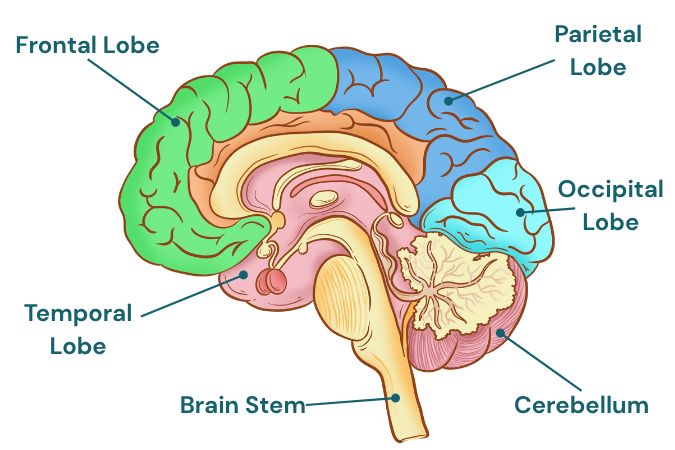
Brain Stem – Breathing, Heart Rate, and Temperature
Because the brain stem is in charge of regulating heart rate, cannabis can increase your heart rate abnormally and, with repeated use, cause heart disease. Cannabis can increase your heart rate up to 20-30%, and those effects can last up to 3-4 hours after the substance leaves your system. Your heart has to work harder to get good blood circulation, and eventually this can lead to things like heart attack.
Temporal Lobe – Hearing, Learning, and Feelings
The temporal lobe is in charge of things like hearing, learning, and feelings. When this part of the brain is affected by cannabis it can result in mood swings, more extreme emotions like increased anxiety or depression (a result of the impact on the amygdala), and decreased memory recall skills.
Frontal Lobe – Thinking, Memory, Behavior, and Movement
This part of the brain is typically responsible for critical thinking skills, personality, and decision-making. However, when influenced by cannabis, this part of the brain isn’t able to process information fully – which results in more impulsive behaviors, impaired memory, and a harder time problem-solving.
Parietal Lobe – Language and Touch
Under the influence of cannabis the body’s pain receptors aren’t as effective, leading to a lesser pain response, and language processing is more challenging. For example: slurred words, incomplete sentences, misinterpreting the meaning of words or using the wrong word by accident.
Occipital Lobe – Vision
The Occipital lobe is in charge of how your brain processes vision. Because your brain is so overwhelmed with information while under the influence of cannabis, it tries to prioritize what is immediately in front of you rather than your full surroundings – as a result your peripheral vision is diminished (aka tunnel vision) and depth-perception may be altered. This is also why during a DUI stop the officers may do an eye test to see how well you can follow their finger when it moves around (they are looking for smooth movement vs “fidgety/shaky” eyes).
Cerebellum – Balance and Coordination
The Cerebellum is in charge of balance and coordination. An easy way of explaining how substance use can affect this part of the brain is to look at how law enforcement conducts DUI tests (and YES, in Montana you can get a DUI for driving under the influence of cannabis). Some tests include walking in a straight line and standing on one foot without wobbling, both of which measure balance and coordination. Cannabis use can decrease a person’s ability to do these skills.
“Approximately 1 in every 100 people who uses highly potent marijuana will manifest psychotic symptoms.”
America Addiction Center
Physical Health
In addition to the lung damage (such as respiratory problems, asthma attacks, infections, and emphysema) cannabis can cause from inhaling an aerosol, there are other concerns as well:
- Poor depth perception and coordination
- Slower reaction times
- Weight gain
- Difficulty developing new muscle
- Weakened immune system
- Chronic fatigue
Learn more about how Cannabis impacts different parts of the body
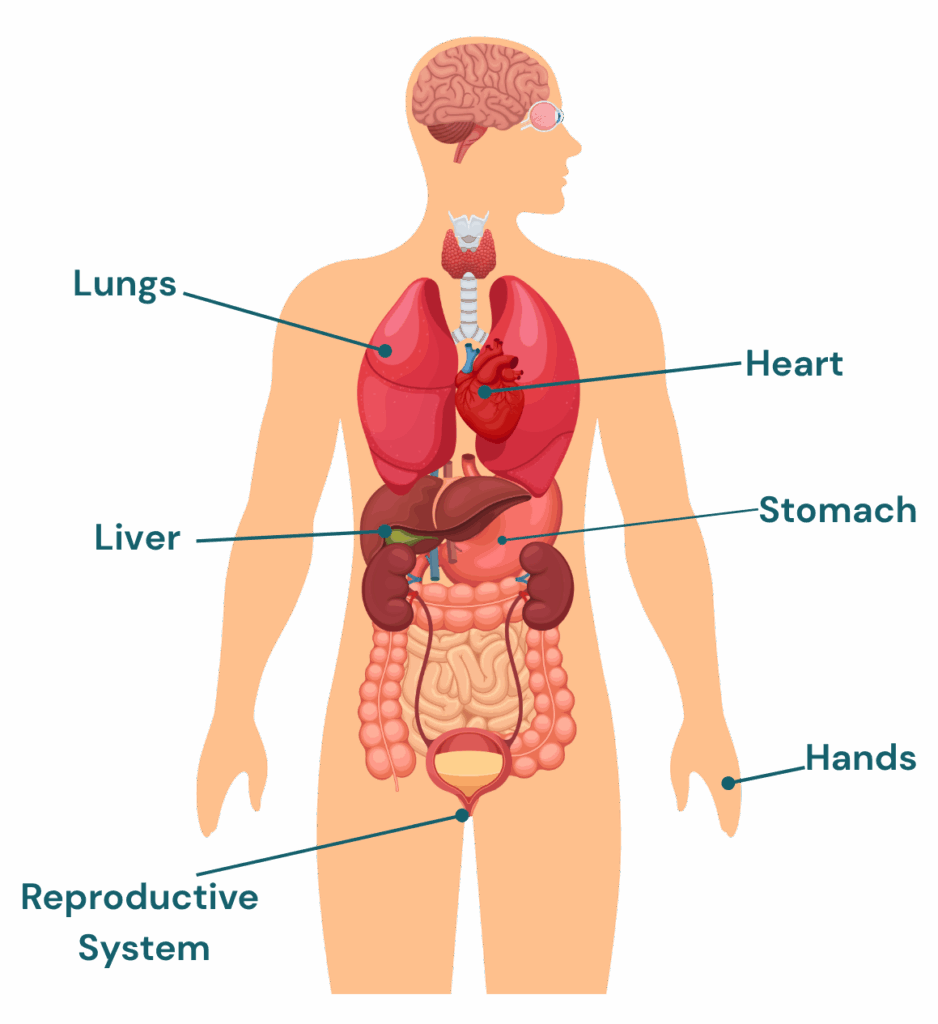
Lungs
Smoking cannabis can irritate the lungs and cause coughing, wheezing, and shortness of breath. It may also raise the risk of lung infections and other breathing problems. Vaping cannabis oils can sometimes cause a serious lung injury called EVALI (E-cigarette or Vaping-Associated Lung Injury).
Heart
Cannabis use can make your heart rate go up by 20–30% for several hours and may raise blood pressure. This can increase the risk of heart problems, especially in people who already have heart conditions.
Reproductive System
Cannabis use may affect hormones. In females, it can sometimes lead to irregular menstrual cycles. In males, heavy use has been linked in some studies to a higher risk of testicular cancer and lower sperm count.
Liver
When cannabis is eaten (like in edibles), THC is processed by the liver into a stronger form. This can make the effects last longer and sometimes feel more intense. Taking too much THC can lead to marijuana toxicity, which can cause confusion, anxiety, or vomiting.
Stomach
Using cannabis often, especially heavily, can lead to Cannabinoid Hyperemesis Syndrome (CHS). This causes ongoing nausea, vomiting, and stomach pain, and can sometimes require hospital care.
Hands (and Feet)
Cannabis can slow your reaction time and affect balance and coordination. This makes activities like driving or sports more dangerous and increases the risk of accidents.
“The consumption of marijuana-based edibles can increase the likelihood of adverse reactions – a high level of THC in the body can lead to acute marijuana toxicity.”
American Addiction Center
Signs of Use
Is my teen using cannabis without my knowledge? What are the signs I should look for?
- A-Socialization
- Change in friends; Avoiding family; No new introductions
- Academic Changes
- Skipping school; Lower grades; Disciplinary Action
- Behavior Changes
- No eye-contact; More secrecy; Disappearances
- Mental Changes
- Poor concentration; Memory lapses; Insomnia/fatigue
- Mood Changes
- Irritability; Temper flare-ups; Defensiveness; Anxiety
- Physical Changes
- Poor Coordination; Significant weight loss or gain; New fidgeting
- Risky Behaviors
- Money is missing; Unhealthy Choices; Objects disappearing
- Withdrawing
- A “nothing matters” attitude; Less involvement in former interests