Air quality is Good to Moderate across Missoula County which is a welcome reprieve from the smoke that resulted in Unhealthy for Sensitive Groups to Unhealthy air quality Saturday evening and most of Sunday. A southwesterly flow is forecasted for this week which relieves us of smoke transporting south from Canada towards Missoula County, thankfully. On the other hand, the East Fire and Mire Fire in the Bitterroots are still active and have the potential to send smoke north into Missoula County, especially in the evenings. The typical diurnal trend of smoke down-draining into valleys in the evenings will likely result in worsened air quality for areas north of those fires in the Bitterroots, such as Lolo, Missoula, and Frenchtown. As smoke pools into low valley bottoms, it can increase in concentration until the next morning when the sun warms valley bottom air and promotes air mixing.
Now for a little weekend recap, because man, it was a bit smoky in Missoula and Frenchtown! Missoula and Frenchtown experienced air quality that was Unhealthy for Sensitive Groups for a period of 21-23 hours Saturday to Sunday. Most non-regulatory monitors (PurpleAirs) were reading higher than the regulatory grade monitors (monitors in Frenchtown, Missoula, and Seeley Lake) exhibiting air quality that was Unhealthy. Did you happen to have a headache, itchy eyes, sore throat, or feel a little groggy yesterday? All of these are short-term impacts of exposure to smoke. At Unhealthy air quality levels, everyone will start to feel these negative health impacts of exposure.
But now that the smoke has passed (for the time being) – ask yourself: Were you Wildfire Smoke Ready? We live in a place that can receive smoke from all over, near and far, and in a mountainous region where smoke pools into valleys and inversions are also likely to trap smoke. Not too many of our lovely summer days this year have been filled with smoke, but it’s important to be ready for smoke so you’re not caught off guard. In previous years, we’ve had smoke from Canadian fires in May, so, in reality, wildfire smoke season isn’t just a couple of months in the late summer.
It can be tough to completely avoid smoke, though. This is why it’s key to reduce your exposure to smoke because it’s almost impossible to completely eliminate it. Being ready for wildfire smoke can look a bit different for everyone but the key points are similar to what you do when smoke is here.
- Do you have a way to clean your indoor air so you can take a break from the smoke? Use a HEPA Air Cleaner or a DIY Box Fan Filter.
- What do you do when you need to be outside when it’s smoky? Have a pack on N95 masks handy. Adjust your plans and opt for a less-strenuous outdoor activity.
- How do you know air quality levels are unhealthy for you to be in? Download the EPA Fire and Smoke Map App and turn on the NOAA Smoke Plumes layer. Learn about the Air Quality Index and what different air pollution levels mean for your health.
- Learn more at MontanaWildfireSmoke.org.
Additionally, I want to share a nice resource with you all. The NOAA HRRR-Smoke model is a great tool to check out if you’re wondering where smoke may be coming from. Under HRRR, click the eye next to Near Surface Smoke to see the forecast (see image below). As mentioned above, the EPA Fire and Smoke Map also has a NOAA Smoke Plumes layer you can turn on under map settings.
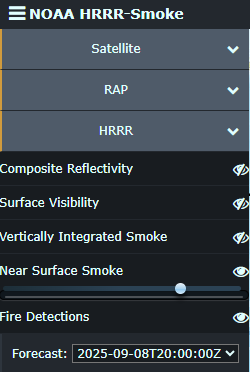
Depending on the scenario, smoke can come from multiple places and it’s not always as cut and dry as a model. In the last week, wildfire smoke came from several fires near and far and this weekend was a bit of a culmination of them all. The HRRR smoke model is helpful but just keep in mind that it is a model and is predictive.
As for the air quali-kitty, Mushu, she opted to stay indoors to avoid the smoke. Her kitty asthma is triggered by smoke, so instead of an outdoor adventure, she enjoyed the comforts of home with clean indoor air!

If you’d like to receive these updates via email, send a message to [email protected]!